
Case study · Ayurvedic skincare
Manovya: a conversion rebuild for a luxury Ayurvedic skincare store.
Manovya sells classical Ayurvedic skincare at roughly ₹1,000 to ₹5,000 a product, and its store gave shoppers almost nothing to justify those prices. From September to November 2026, timed around the festive season, I rebuilt it so the proof sits where people decide to buy: seven product pages, five ceremony sets, a festive sale page, sale pricing shown the same way across the site, and a new homepage.
My role
Shopify CRO manager on contract, working alongside the brand’s own team. I diagnosed the store, rebuilt the product and bundle pages, built the festive sale and redesigned the homepage.
- Client
- Manovya
- Country
- India
- Sector
- Ayurvedic skincare
- When
- Sep to Nov 2026, Navratri to Diwali
- Live
- manovya.com
The problem
Manovya’s products cost roughly ₹1,000 to ₹5,000 each, but the store showed no reviews, very short descriptions and no ingredient lists, and the Eurofins lab reports sat on a separate page.
The brand is built around “ceremonies”, its routines, yet the store could only sell single products, and the homepage didn’t say what the brand sells.
My diagnosis: priced like a flagship, evidenced like a sample. The job was to put the proof next to the Add to Cart button before festive traffic arrived.
What I did
- Set up a draft theme under Git, so nothing reached the live store until the client approved it. Audited GA4 and Search Console for a baseline, set add-to-cart and begin-checkout as key events, and ran a weekly tracker shared with the client.
- Rebuilt all 7 product pages: a new buy box with an at-a-glance summary, the full AYUSH-approved ingredient list (all 26 herbs in Kumkumadi Tailam), Eurofins heavy-metal and microbial results with safe limits, step-by-step ceremony guides, and visible pair-it-with cards in place of a hidden “frequently bought together” popup.
- Put AYUSH, ZED Gold, cruelty-free and no parabens, sulphates or silicones badges in the first screen, with a certification strip on every page.
- Built a bundle page template: a buy box showing what is inside the set, arched step-by-step product cards, a price “receipt” showing the saving, combined lab results and reviews pulled from the products inside. Five ceremony sets run on it: morning, night, repair, glow and travel sizes.
- Built the Festive Gift Sale page: offer coupons and free-gift tiers, a “who are you gifting” finder, countdowns to Karwa Chauth, Dhanteras and Diwali, a sticky offer bar on phones, a festive FAQ and the offer terms. I wrote the festive design system up so future campaign pages can reuse it.
- Made one theme setting apply festive prices to product cards, product pages, search, ceremony pages and the homepage, with a “% off” tag. Prices are calculated to the paisa so the cart always matches the page, and the sale switches off with one checkbox or ends on a set date.
- Fixed a conflict where the theme and the cart app both handled add-to-cart, which put ceremony sets in the cart twice and jumped the page to the cart. Now there is one add and the cart drawer stays open, confirmed with automated browser tests.
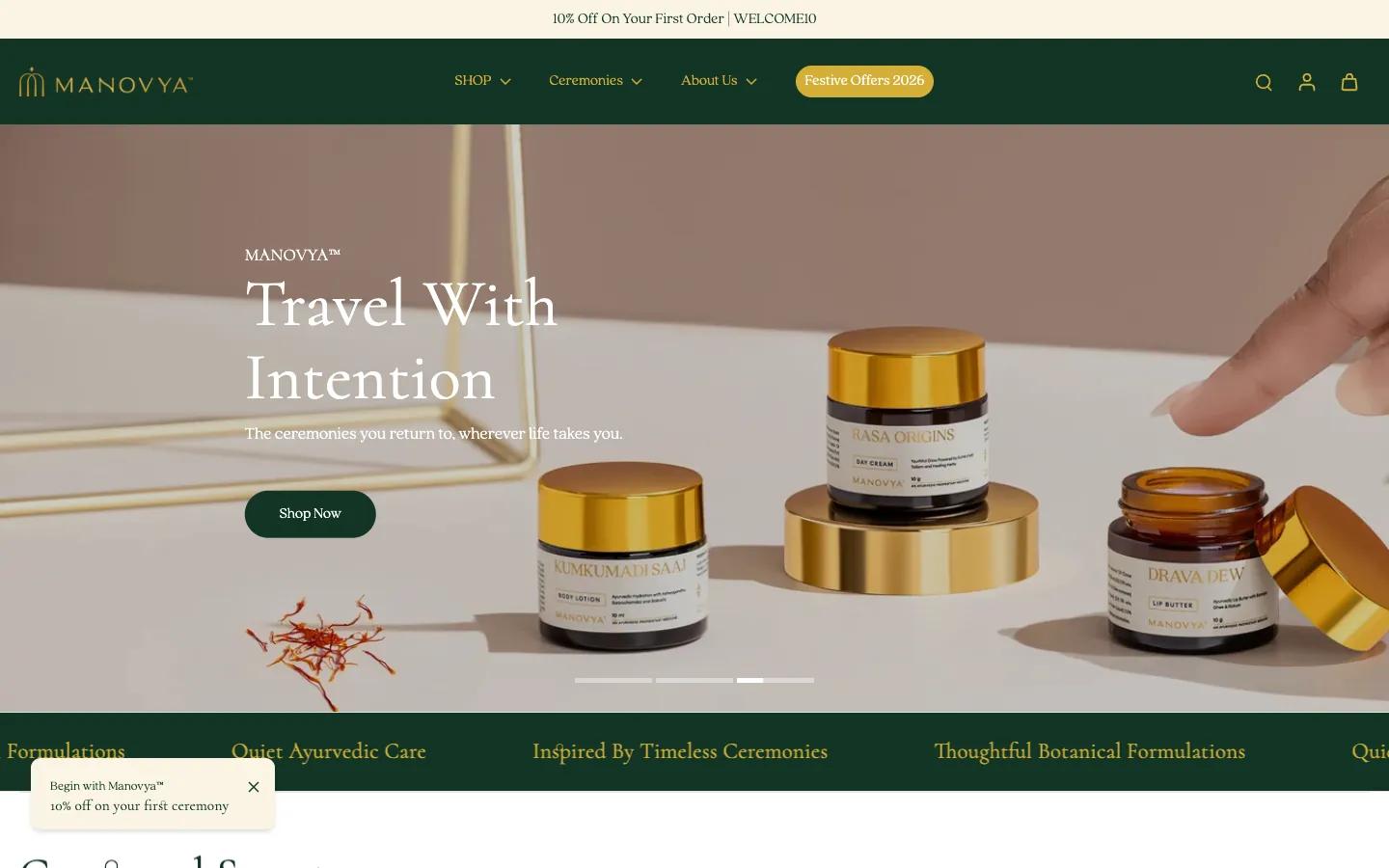
- Redesigned the homepage, now in client review: a hero with the review rating and an offer strip that hides itself when the sale ends, a trust row, ceremony cards showing each set’s saving, festive product prices, real review quotes, ingredients, a Eurofins results table, the brand story and a “before you order” section with FAQ structured data.
- Tested on iPhone and Android screen sizes with device emulation, and fixed a layout overflow that made the phone view zoom out.
Timeline
Sep to Nov 2026, Navratri to Diwali.
The outcome
The proof now sits next to Add to Cart on every product page and ceremony set, and one setting controls festive pricing across the store. The new homepage is with the client for review.
Need something like this?
Tell me what you’re building. I reply within one working day, and the person who replies is the person who writes the code.